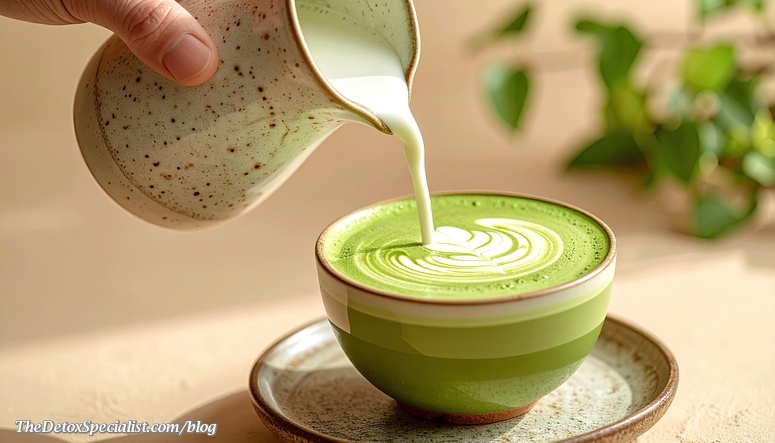
If you’ve walked past a coffee chain anywhere in the US or UK recently, you’ve probably seen it: bright green matcha lattes front and centre on the menu. From iced matcha with oat milk to ceremonial-grade whisked teas and Dirty Matcha with expresso coffee. matcha is no longer a niche health-store item. It’s become a mainstream wellness staple — and a trending topic on TikTok, where creators share everything from aesthetic matcha routines to bold claims about its detox powers.
But beyond the hype and the hashtags, what are the real matcha tea benefits? And does matcha genuinely deserve a place in a detox-focused lifestyle?
In this article, we’ll break down what matcha actually is, explore the science-backed matcha tea benefits, and explain how to use it strategically if your goal is to support natural detoxification, energy, and metabolic health.
What Is Matcha, Exactly?
Matcha is a finely ground powder made from specially grown green tea leaves (Camellia sinensis). Unlike standard green tea, where you steep and discard the leaves, matcha involves consuming the entire leaf in powdered form. That single difference dramatically increases its nutrient density.
The leaves are shade-grown for several weeks before harvest. This process increases chlorophyll production (hence the intense green colour) and enhances certain amino acids — particularly L-theanine.
After harvesting, the leaves are steamed, dried, de-veined, and stone-ground into an ultra-fine powder. The result is a concentrated source of antioxidants, caffeine, amino acids, and plant compounds.
Because you ingest the whole leaf, matcha provides significantly higher levels of beneficial compounds compared to traditional green tea.
-
Matcha Tea Benefits for Detox Support
Let’s clarify something important: your body already has highly efficient detoxification systems (provided you are not deficient in the nutrients needed for its function) — primarily the liver, kidneys, gut, lungs, and skin. No tea “detoxes” you in isolation.
However, certain compounds can support these systems. This is where matcha becomes relevant.
Related reading : Green Tea Detox: Can You Really Detox With Green Tea?
Rich in Chlorophyll
The shade-growing process boosts chlorophyll content. Chlorophyll has been studied for its potential to bind to certain toxins and support liver function. While it’s not a miracle cleanse, higher chlorophyll intake may assist your body’s natural elimination processes.
High in Antioxidants (Especially EGCG)
One of the most researched matcha tea benefits is its antioxidant density. Matcha is particularly rich in catechins — especially epigallocatechin gallate (EGCG).
EGCG has been linked to:
- Protection against oxidative stress
- Support for liver function
- Reduction in inflammation
- Improved metabolic activity
Oxidative stress plays a role in toxin accumulation and cellular damage. By reducing oxidative burden, matcha may indirectly support detox pathways.
-
Sustained Energy Without the Coffee Crash
One reason matcha is trending across coffee chains is that people are actively seeking alternatives to coffee. Many experience jitteriness, anxiety, or energy crashes from high caffeine intake.
Matcha contains caffeine — roughly 30–70 mg per serving depending on strength — but it behaves differently in the body.
The L-Theanine Effect
Matcha contains L-theanine, an amino acid that promotes calm alertness. When combined with caffeine, L-theanine appears to:
- Slow caffeine absorption
- Reduce jitters
- Improve focus
- Support alpha brain wave activity (linked to relaxed concentration)
This creates what many describe as “clean energy” — sustained mental clarity without spikes and crashes.
For those reducing coffee during a detox protocol, matcha can act as a transitional beverage that supports productivity without overstimulating the adrenal response.
Related reading: Caffeine Addiction : How to Quit Coffee Before Your Detox Diet
-
Metabolism and Fat Oxidation
Another reason matcha tea benefits are widely discussed online — especially on TikTok — is its association with weight management and fat burning.
Research suggests that green tea catechins, particularly EGCG, may:
- Increase thermogenesis (calorie burning)
- Support fat oxidation during exercise
- Improve metabolic efficiency
While matcha is not a magic weight-loss solution, incorporating it into a structured lifestyle plan (balanced diet, resistance training, adequate protein intake) may provide a modest metabolic advantage.
Importantly, because matcha stabilises energy and reduces cravings associated with caffeine crashes, it may indirectly support better dietary adherence.
- Gut Health and Microbiome Support
A healthy detox system relies heavily on gut function. If elimination pathways are sluggish, toxins can recirculate.
Polyphenols in matcha may:
- Support beneficial gut bacteria
- Reduce inflammatory markers in the digestive tract
- Improve gut barrier function
Emerging research indicates that green tea polyphenols interact with the microbiome, promoting microbial diversity — a key marker of gut resilience.
For detox blog readers, this is particularly relevant. Supporting gut integrity ensures waste products are effectively processed and removed rather than reabsorbed.
Note: You may be interested in reading my detox article on Substack > The Detox Myth: What Actually Works
- Blood Sugar Stability
One of the most overlooked matcha tea benefits is its impact on glycaemic control.
Some studies suggest that green tea compounds may:
- Improve insulin sensitivity
- Reduce post-meal glucose spikes
- Support metabolic flexibility
Stable blood sugar levels are critical during detox protocols. Fluctuations can increase cravings, mood swings, and energy crashes.
If consumed without added sugars (avoid heavily sweetened café versions), matcha can be a supportive addition to a blood sugar-conscious routine.
- Cognitive Function and Focus
Matcha has long been used in Japanese tea ceremonies and by Buddhist monks to maintain mental clarity during meditation.
Modern research suggests potential benefits for:
- Working memory
- Sustained attention
- Cognitive performance under stress
Together, caffeine and L-theanine can support better concentration and clearer thinking without the overstimulated feeling that coffee sometimes causes.
For professionals, entrepreneurs, and content creators (including those influenced by TikTok wellness trends), matcha offers productivity support without the wired feeling of multiple coffees.
- Cardiovascular Health Support
Green tea consumption has been associated with improved heart health markers. Potential cardiovascular matcha tea benefits include:
- Reduction in LDL oxidation
- Improved endothelial function
- Lower inflammation markers
- Modest improvements in blood pressure
Given the concentration of catechins in matcha compared to regular green tea, these effects may be amplified — though dosage and quality matter.
Why Matcha Popularity Is Exploding Right Now
Several factors are driving the matcha boom:
- Coffee fatigue – Many people are reassessing their caffeine intake.
- Aesthetic appeal – The bright green colour is visually distinctive and social-media friendly.
- Wellness culture – Consumers increasingly want functional beverages.
- TikTok influence – Viral “matcha morning routine” videos have accelerated awareness.
However, not all matcha drinks are created equal.
Many high-street matcha lattes contain unhealthy ingredients:
- Syrups
- Added sugars
- Sweetened plant milks
These additions can negate many of the metabolic and detox-supportive matcha tea benefits.
How to Choose High-Quality Matcha
If you want the full spectrum of matcha tea benefits, quality matters.
Look for:
- Vibrant, bright green colour
- Fine, smooth powder texture
- Origin from Japan (Uji, Nishio, or Kagoshima regions are well regarded)
- “Ceremonial grade” for drinking (culinary grade is better for baking)
Avoid:
- Dull yellow-green powder
- Bitter, overly astringent taste
- Added sweeteners
High-quality matcha should taste smooth, slightly sweet, and mildly vegetal — not harsh.
Related reading: Simple Guide to Find The Best Matcha Green Tea Company
How to Use Matcha in a Detox Lifestyle
Here’s a practical approach:
- Morning Replacement for Coffee
Swap your first coffee for a simple matcha:
- 1 teaspoon matcha
- 70–80°C clean water (not boiling)
- Whisk until frothy
or try a Matcha Oat Milk Latte (serves two)
- 2 tsp organic matcha tea
- 600 ml barista style oat milk
- Good quality agave or maple syrup to taste
- Put 1 tsp matcha powder into two mugs
- Add 1 tsp maple or agave syrup to each mug
- Pour 1 tbsp pre-boiled hot water into each mug and whisk until it becomes a smooth paste
- Heat oat milk in a pan over medium heat.
- Using a whisk or an electric milk frother whisk the oat milk till foaming and warmed through
- Holding the mug at a slant pour the hot milk down the inside of the mug straightening the mug as it fills up.
This will help you create a pattern over the top of the milk. - Repeat with the other mug.
- Serve straight away. Add more sweetener to taste. Enjoy!
2. Pre-Workout Boost
Because of its support for fat oxidation, matcha works well 30–60 minutes before training.
- Mid-Afternoon Focus
Instead of sugary snacks, a light matcha can stabilise energy without affecting sleep (provided you’re not caffeine-sensitive).
Who Should Be Cautious?
While matcha tea benefits are impressive, it’s not suitable for everyone in large quantities.
Be cautious if you:
- Are highly sensitive to caffeine
- Have iron deficiency (green tea can inhibit iron absorption)
- Are pregnant (limit caffeine intake)
- Have liver conditions (excessive supplementation of green tea extracts has been linked to rare liver issues)
Moderation is key — typically 1–2 servings per day is reasonable for most adults.
Is Matcha Just a Trend?
Some TikTok trends fade quickly. Matcha, however, has been consumed for centuries in Japan. What’s new is its commercialisation and Western reinterpretation.
The hype may be modern — but the core benefits are rooted in traditional use and increasingly supported by research.
Unlike many detox fads, matcha is not extreme, restrictive, or unsustainable. It’s simply a nutrient-dense beverage that can complement a structured health protocol.
Final Thoughts on Matcha Tea Benefits
The surge in interest across UK coffee chains and TikTok reflects a broader shift toward functional wellness. ( Check out my new Substack Functional Nutrition Brief)
The genuine matcha tea benefits include:
- High antioxidant density
- Liver-supportive compounds
- Sustained, calm energy
- Metabolic support
- Gut microbiome benefits
- Blood sugar stability
- Cognitive enhancement
While it’s not a magic detox solution, matcha can absolutely support the body’s natural detoxification systems when integrated into a balanced lifestyle.
If you’re building a sustainable detox strategy — one based on nutrient density, metabolic balance, and inflammation control — matcha deserves serious consideration.
The key is intentional use: choose quality, avoid added sugars, and incorporate it as part of a broader evidence-based wellness framework.
And if you enjoy the ritual of whisking that vibrant green tea each morning? That daily pause might be one of the most underrated benefits of all.



Leave a Reply